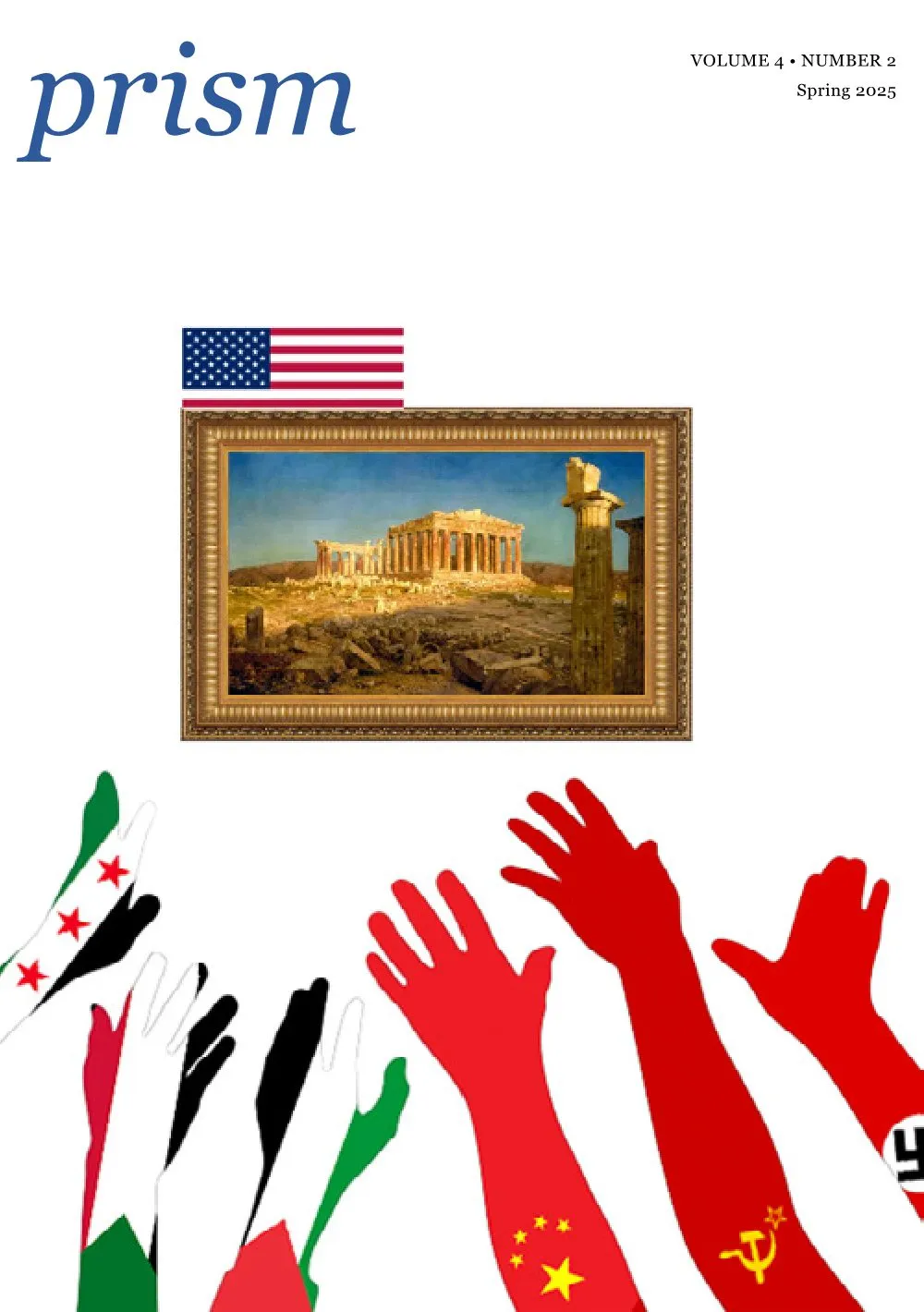
Spring 2025
Volume IV, Issue II
- Published
- In this issue
- 10 papers
- 99 pages
Contents
Editor’s Note
“This, fundamentally, is why we cannot stay away from history: it offers the only extensive evidential base for the contemplation and analysis of how societies function.”
– Dr Peter N. Stearns
As editors for Milton’s history publication and as students who have devoted a significant chunk of our time at school to the study of the past, we often wonder to ourselves, “Why study history?” Historical knowledge does not help us with everyday competencies, it rarely lends itself to easy employment, and even its ability to convince someone of an argument dwindles by the day as people grow less and less comfortable with listening to those they disagree with. Moreover, contrived arguments like that we should learn history to prevent its tragedies from repeating themselves are abstract and unconvincing.
As we learned more about history, however, the answer became more clear: history helps us better understand the profound whys of the world- why political and economic systems work the way they do, why people feel certain ways, why people disagree with each other, and so on. The world is nothing more than the sum of all human decisions, and the study of history examines the “code” that underlies all these decisions. In understanding this “code”, we better understand not only ourselves and the world but also how to shape it. This knowledge helps us critically in every area of our lives, from civic participation to discussions with friends to deciding what we find meaningful enough to do for a living. Knowing more makes us much more likely to make better decisions. This is why we must study history.
If history helps us understand why people do things, then what answers has it provided? We hope that this issue of Prism Youth Journal provides a glimpse into some of the insights Milton students have managed to glean from their deep-dives into history; no answer is the whole picture, but all of them bring us one step closer to understanding humanity itself. Rhys Adams ‘26’s paper on the institutional role of the military in hindering Syrian democratization reveals the centrality of bureaucratic power in sustaining the collective behavior of violence. Meanwhile, Molly O’Brien ‘26’s paper on Panda Diplomacy interestingly advocates for the underrated importance of our tendency to find things cute in shaping global politics. Papers from eight other Milton students each paint their own unique stories filled with nuances and revelations.
We hope you read this issue and come away having learned something about history, the world, or yourself. More importantly, though, we urge you to do something meaningful with what you learned. For our money, history teaches two skills: the skill of humbly learning something new and the skill of standing up for what we believe in. The fact that you are reading this publication indicates that you need little help with the former. As for the latter, we urge you to take what you have gained and seriously contemplate how it should add nuance to your worldview and to stand by those views in every decision you make. History is not a natural phenomenon–it demands each of us to make decisions to shape it to our will. We hope you learn some history and then write more yourself. Anything less is to waste your talent as a historian.
Yours sincerely,
The Editors-In-Chiefs
Molly and HT
Masthead
-
Editors-in-Chief
-
Editorial Board
-
Faculty Advisor