History
The Relative Magnitude and Endurance of American Liberty
Summary
Draft summaryThis paper compares American and European liberalism after the First World War and argues that American liberty has endured because it rests on the protection of the individual. It contends that in Weimar Germany and revolutionary Russia liberal ideals were diluted by collectivism, which states under constant threat of war found more useful.
Contents
An Introduction
In the time after the Great War, many European countries began to shift to be more nationalistic, imperial, and liberal ideals began to offshoot from the norm. First, it is important to define liberalism, as it can be viewed differently in different societies. Liberal governments are those who promote and secure individual liberties, at a federal level. This definition does not include those who do suspend those individual liberties to idealistically promise them at a later date, or who claim to support liberality, then govern to the contrary. Both the German Wimar Republic, established by the Liberal Socialist Democratic Party (SPD), and the Russian Revolution’s founding ideas were those of liberalism; however, these ideals did not last long, and were eventually replaced with Authoritarian limitation on individual liberty, and the promise of a future utopia at the expense of that very free individualism. Similarly, the United States was founded on the ideals of liberty, though unlike their Germanic and Russian counterparts, these ideals proved to be durable, and did not ever decimate, or even -many would argue- slightly dilute. This seems to be linked to the very definition of liberalism previously mentioned, which is the focus on individualism. American society is founded on ideas of individualist freedom, whereas European Liberalism was diluted by collectivism, and thereby proved to be more flexible and malleable. Furthermore, with such uncertain safety and constant war, a focus on individualism threatened to lead to capitulation for European states, and so was incredibly unsavory compared to the comparatively strong collectivism.
The Ever Durable American Individualist Liberalism
In the Declaration of Independence, Thomas Jefferson outlined what ideas Americans had that were mutually exclusive with British rule -and thereby required independence from Britain. The primary idea of the American hypothesis “...that all men are created equal, that they are endowed, by their Creator, with certain unalienable rights, that among these are life, liberty, and the pursuit of happiness” ( Jefferson) was written to introduce the document. These ideas are not new, they are almost exactly re-penned from those described in John Locke’s Second Treatise on Government; however, they had never been applied to government, especially at their extreme. Through this infamous line, the idea of individualism is cemented: securing one the inalienable right to a free and liberal life, in which they can pursue their own individual interests without government interference. This last piece is key to what separates American Liberalism from European Liberalism. In America, as opposed to other nations’ promotion of behavior which inherently benefits society, one can engage in behavior regardless of its societal utility. The only caveat to one’s pursuit of happiness is when it inhibits anothers. The idea of this limit is well illustrated in a classic American adage often attributed to a Judge “Your liberty to swing your fist ends just where my nose begins.” (Unattributed). The speaker of this quote is hypothesized to range from important author on liberty John Stuart Mills, Supreme Court Justice Oliver Wendell Holmes, and even President Abraham Lincon; however, attribution of this quote is not really important as it has cemented itself as legal precedent in the United States independent of the identity of the quoted. The meaning of the Judges’ words illustrates that one has unregulated liberty, up until the point at which it is harmful to another. While this may at first seem like a restriction on individualism, as it restricts harmful action, it can actually viewed as a further benefactor of liberal individualism. The adverse of the adage is to say that the Judge’s pursuit of happiness cannot be inhibited by an aggressor using their individual desire to restrict his liberty. In viewing the quote this way, by inhibiting the aggressor’s right to harm The Judge, The Judge’s individual liberty is protected from outside influences and regulations. Furthermore, the aggressor has unrestricted individual freedom and autonomy to move his fist, up until the point at which it hits the Judges nose. Therein, so long as the Judge’s liberty is not decimated or diminished, the aggressor has full liberty over their fist. The extreme at which individual liberty is emphasized in the United States is truly unrivaled, original, and it directly secures American Liberalism to not face rivals. Any threat to individual liberalism -if the adage holds true, and the pursuit of happiness is absolute and adequately protected- is impossible: threatening liberalism directly rivals the founding principles of the state, and is essentially impossible without full government capitulation and re-establishment due to the safety nets present in the government. Furthermore, the fault which European Liberal Governments fall to, that of extreme collective liberalism, cannot exist. One cannot both pursue their own happiness and be expected to sacrifice their individualism to a collective goal.
American Individualism’s Durability In Wartime and in Crisis
Having this strong individual liberty may seem to conflict with the need for a strong wartime presence and life in war and or crisis. It does definitely affect life in war and crisis, though, historically, solutions have been found for the two to coexist. In a crisis, individualism is upheld adequately on average by the government. Coming out of the Depression, and into wartime, President Franklin Delano Rosevelt established the New Deal. The New Deal set out primarily to fix, what FDR described in his Fireside Chat of July 24th, 1933 as the “...the part of the problem that concerned the credit of the individual citizens themselves,” the lack of money in American pockets due to the Great Depression, an incredibly serious crisis. The Depression directly infringed on American Individualism as people were forced into dependence on employers for money, and thereby became slaves to economic opportunity. FDR’s solution was the New Deal. While it is criticized by many, and most definitely eerily slips down the slope of Government overreach, it had the noble goal of helping American individual pursuits. Through increasing welfare programs, Americans who faced any sort of crisis -whether it be financial, military, or health-based- would have a fall safe, and thereby not lose their individualism to poverty-based dependence. This deal ended up successfully pulling Americans out of the depression, thereby allowing them to continue to execute their individualist dreams. The one major caveat to government protection of American Individualism is found in the wartime draft. By forcing conscription into military battle, one’s life and individual liberty is directly infringed on. FDR did tend to be criticized for his infringements on individual liberty; however, he did hope to restore individualism to the citizens -that part is key- after the war. In a statement on reducing the draft conscription minimum age, FDR stated he was working on a plan “...for the taking of steps to enable the young men whose education has been interrupted to resume their schooling and afford equal opportunity for the training and education of other young men of ability after their service in the armed forces has come to an end.” (Statement on Signing the Bill Reducing the Draft Age). This may seem like European Collectivist dreams, and while it is concerningly similar, it has one major distinction; the Europeans do not promise a return to liberalism for the contemporary individual, like FDR argues, rather, they promise utopia for the future generations, at the expense of the current individual. In Europe, however, very little welfare would be assigned to the current individual, as he is simply a cog in the machine.
European Collectivism, as it was adopted by Germany
The idea of liberalism, as it is viewed in America, may seem appealing; however, across Europe, the idea was contaminated by Collectivism. In Weimar Germany, individualism was in fact held as a fundamental right; however, it could be stripped if necessary by the government. The Weimar Constitution states in Article 114 that “Personal liberty is inviolable. Curtailment or deprivation of personal liberty by a public authority is permissible only by authority of law.” (Weimar Constitution) Therein is the major threat to individualism, in states of emergencies, it can be violated; though it is not concretely secured, nor is it held sacred, the Third Reich did in fact begin with individual liberty protected. However, within a month of Adolf Hitler’s appointment as Chancellor, this protection was stripped -and was able to be striped due to the article’s weak language After the arson of the German Parliamentary Building, Nazi leaders pushed for The Decree of the Reich President for the Protection of the People and the State, popularly known as The Reichstag Fire Decree. Ultimately, the Nazis utilized the fire to convince President von Hindenburg to approve drastic limitations on liberty, as the fire promoted a crisis to the Government, and thereby a threat to the German people as a whole -as a collective. The opening line of the document states that “[many articles, including article] 114… of the Constitution of the German Reich [is] suspended until further notice. Therefore, restrictions on personal liberty, on the right of free expression of opinion, including freedom of the press, on the right of assembly and the right of association… as well as restrictions on property, are also permissible beyond the legal limits otherwise prescribed.” (Reichstag Fire Decree). Therein is one of the issues with German individualism, it is not absolute nor guaranteed. By allowing individualism to be suspended by the Government, liberty is not protected in a public crisis. Without individual liberty, lots of these other rights many people hold sacred can be sacrificed for the betterment of the collective. The Nazi Party Platform directly follows this course. Point 10 states that “It must be the first duty of every citizen to perform physical or mental work. The activities of the individual must not clash with the general interest, but must proceed within the framework of the community and be for the general good.” (Nazi Party Platform). Therbye, individual liberty is abandoned for collective work towards the general good, as individualism is selfish and lacks general utility. All of these restrictions on individual freedom are only justifiable through the lens of collectivism. The Weimar Constitution allowed the government to violate personal liberty presumably and applicably in the case of collective crisis. The Reichstag Fire Decree was only justifiable as to assure the safety of the German government, and therefore the collective German people as, in the brainwashed eyes of von Hindenburg, they were at risk. Finally, the Nazi party platform argues that individual liberty can often clash with the general good, and therefore cannot be absolutely protected, as its importance is outweighed by the importance of protecting the collective good. A Nazi supporter, Hans B, who had been educated with the individualist French romantics, writes “In our nation the priority is not on the individual and what benefits him but on the common good, the Volk and Germany. We are responsible to future generations.” (Hans B) The Nazis -in creating a common threat from the Jews, Communists, and other groups- established a crisis. Thereby, they could justify the removal of individual liberty to an extreme, as to wish for individual liberty is selfish in the face of a crisis. It is the responsibility -it may even be an absolute obligation- of a decent, moral, noble German to sacrifice his selfish liberty and save the future generations. In the mythos of the Third Reich, as their ancestors did for them. Through a sacrifice of the liberty of the individual, to secure work towards the eventual collective good, liberty as a whole is lost. This is precisely why Germany becomes an anti-liberal authoritarian dictatorship under the Nazis; Hitler can justify control up until the Aryan Utopia saves the collective from the crisis, a far-off utopian dream.
European Collectivism, as it was adopted by Russia
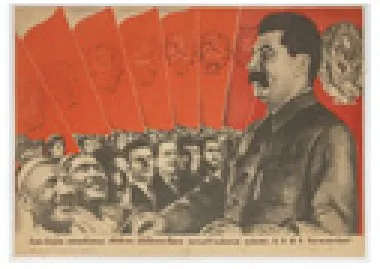
In the onset of the 20th century’s Russian Liberal Intellectual Romanticism, Russians became disillusioned with their formerly beloved autocratic monarchy. Formerly, the majority of Russians were perfectly happy with little liberty and strong adherence to societal norms, hoping for a position in the nobility and to be viewed as socially noble -underneath their adored Tsar of course. Individual liberty was not really desired, and even viewed distastefully. Fyodor Dostoyevsky, in his book Notes From Underground, outlines this philosophy in his Russian caricature, the Underground Man. To begin Chapter One of Part Two, the Underground Man speaks on Russian romantics, ultimately determining that “Every decent man [of the 1860s in Russia] is and must be a coward and a slave. That is his normal condition.” (Notes From Underground (Pevear and Volokhonsky Translation) Pg 45) This insight is incredibly valuable as Dostoyevsky himself is -for lack of a better term- incredibly counter culture, and critical of his society’s norms, so his view is realistically critical, not diluted by Russian Romantics’ love for the “beautiful and lofty” (unrealistic, idealistic descriptions of their state). (Dostoyevsky 47) The caricature of the Underground Man adequately describes the desired and romanticized life of the 19th-century Russian man. He is perfectly content being a coward and a slave, later in the book even arguing that if individual liberty was given to men “[they would] immediately beg to be taken back under tutelage.” (Dostoyevsky PG 131) The point the Underground Man makes is incredibly important in foreshadowing the Russian tendency to replace liberalism with authoritarianism nearly instantly after gaining liberty. He argues that the current Russian citizen only wishes to be viewed as noble, and is thereby a slave to society. If society determines nobility, and being noble and decent is the ultimate goal, then sacrificing one’s liberty is a minimal loss; furthermore, he argues individual liberty is a hefty responsibility, and so in giving it to a Russian, he will beg to return to subordinance, and thereby have fewer responsibilities. In subordination to society, no real decisions must be made, and life is safer; there is a direct and defined path to the eventual goal, and, as the Underground Man describes, the Russian people are pragmatic people seeking “practical goal[s] (some nice little government apartment, a little pension, a little decoration or two)” (Dostoyevsky PG 45) not like American and French idealist’s who seak non-utilitarian liberal dreams. Ultimately, this being the common psyche of the Russian people is key to why their liberal dreams failed. In 1905, after being disillusioned with the idea of subordination to the Tsar without freedoms, the Russian people actually revolted in hopes of individual liberalism. The byproduct of this revolution was Tsar Nicholas II October Manifesto. The October Manifesto set up an elected parliament and planned “To grant to the population the essential foundations of civil freedom, based on the principles of genuine inviolability of the person, freedom of conscience, speech, assembly and association.” (October Manifesto) This presented an incredibly optimistic liberal future for the Russian people, where they would have elected officials and protected personal liberties. However, very little democratic and liberal reform came from this manifesto. This lack of liberty -more so criticized as a lack of desired living conditions- led to a more dramatic revolution, and the rise of the Bolsheviks. The Bolsheviks presented a clear and direct path to the common goal in collectivism, without the hefty responsibility of individualism and self-determination -ideas which had proved futile after the October Manifesto, promising to still keep liberal equality. A Bolshevik supporter Victor Serge describes how “What [the Russian people] want, the party expresses at a conscious level and then carries out. The party reveals to them what they have been thinking. It is the bond that unites them from one end of the country to the other. The party is their consciousness, their organization.” (Serge) There are no individual desires, as the party reveals what all people want, serving as a collective consciousness and removing the responsibility of individual liberalism. Furthermore, if there aren’t individual desires, then there is no need for individual liberty. This philosophy catches on quickly as it closely resembles the hypothesis of Dostoyevsky’s Underground Man. Russians, when they believe individual freedom to be burdensome -as Dostoyevsky describes many do- will easily fall to their knees when confronted with collectivism. The successors of the Bolsheviks, the Communist Party take this collectivism to an extreme. Under their rule, all individualism is shunned, and collectivism becomes the only acceptable ideology. Propaganda posters describe soviet idealism as the power of a “brotherhood.” The use of the term brotherhood insinuates removing yourself from individualism and joining a collective familial society. In figure 1, a soviet propaganda poster from which the quote containing brotherhood derives from, Gustav Klutis illustrates the Russian masses becoming a collective under their leader, thereby losing their individuality, and becoming a collective sea of faces. Furthermore, Russians argue that American individualism is not true freedom. Another poster, figure 2, titled “The Shame of America” presents the image of a single individual dead in front of the backdrop of a heavily populated city, with none of the inhabitants coming to help him. This illustrates the fault of the US being the beloved individualism, as without a collective -in the Soviet worldview- humans will suffer, and none of the self-interested, selfish, greedy, capitalists will come to protect them. However, contrary to the beautiful society hypothesized by Soviet propaganda, and due to the destruction of the individual to promote the rise of the collective brotherhood, liberty as a whole was destroyed. Similar to Hitler, the Soviets claimed that sacrificing your liberty and prosperity was a moral obligation in hopes of achieving the eventual utopia described in the hypothetical last stage of Communism, where no central regulatory authority is necessary, and all our equal.
In Conclusion
The reason why American Liberty has endured is due to the sacred protection of the individual. The reason why collectivism was pushed by many European countries -contaminating individualism, and eventually liberty as a whole- was simple: in societies constantly facing war, it is easiest to rule over a collective hive mind. This is why even the US Military infringes on individualism through the draft, and trains its soldiers to not be individuals, but rather a collective hive-minded war machine. The United States -outside of the substantial, yet isolated military practices- however, places individual liberty as a fundamental inalienable right as it is vital to liberty as a whole. If Liberty is inalienable, then collectivism can not contaminate and destroy it, and so even if collectivism appears to raise utility to the government at any given time, it cannot really be adopted -mainly for the reason of its innate need to strip individual freedoms, and thereby one’s pursuit of happiness. The Nazis and the Soviets, contrary to their propaganda, understood the power of the collective independent of utopian dreams, and did not have safety nets protecting individual liberties holding them back. While the claim made by these groups was that collectivism was necessary to reach the utopia, and that the ends justify the means -this claim may prove to be a true belief in some leaders, especially Adolf Hitler who, it seems, did believe in the Aryan Utopia- it is most definitely not the whole reason behind collectivism. A collective society, where each individual truly believes they are a part of something bigger than themselves, is an incredibly formidable force. It’s not a coincidence that these collectivist regimes had incredibly strong military forces, and that these collectivist programs were founded out of a necessity for quick military strength. Part of the reason why the United States has the privilege to secure individual liberty is that America is relatively isolated from threats, and historically has not had to protect itself from capitulation. Therefore, collectivism is not really necessary, and thereby not very appealing to Americans. Europeans, however, do not have this luxury. Historically, there have been countless wars and constant threats in Europe. Due to these dangers, the idea of a strong collective is incredibly romanticized by European governments. If without a collective, capitulation to a stronger force is more likely, then a nation constantly under threat of attack would see incredible utility in collectivism. European Liberalism, due to this fact, is always threatened by the seduction of collectivism, which often becomes exclusive to liberalism as a whole, and therefore is substantially less durable than American Liberalism.
Figures