History
Progress in Gynecological Advancements: But At What Price?
Summary
Draft summaryThis paper examines the gynecological experiments that J. Marion Sims carried out on enslaved women without their consent in the antebellum United States. It argues that his achievements rested on exploitation, sets them within a longer pattern of medical abuse of Black Americans, and stresses the importance of informed consent in medicine today.
The history of medical advancement has been marred by numerous instances of unethical experimentation with some of the most egregious violations carried out on marginalized populations. Among these, black people have been disproportionately subjected to invasive, often coercive, medical practices without their consent. This dark legacy reveals a troubling intersection of racism and research, fundamentally questioning the ethical foundations upon which some medical advancements were built. From the non-consensual gynecological experiments conducted by J. Marion Sims in the 19th century to more contemporary abuses such as the Tuskegee syphilis experiment and Henrietta Lacks. The experiences of black people have exposed a pattern of exploitation. These instances of medical experimentation highlighted a critical need for a reevaluation of practices and policies to ensure that such injustices are never repeated. The medical experiments on female slaves in Antebellum America reveal the profound impact of exploiting their bodies for experimentation. The methods used by practitioners like J. Marion Sims highlight the dehumanizing and unethical nature of such practices in the pursuit of medical knowledge. The brutality and inhumanity of Sims’ experiments led to a reassessment of his legacy because of the way he achieved success through his exploitation of non-consenting women.
Human medical experimentation has a complex and often controversial history, marked by both groundbreaking advances and profound ethical dilemmas. Historically, the lack of stringent regulations allowed for experiments that, while contributing to medical knowledge and the greater good, often compromised the well-being and rights of the people being experimented on. J. Marion Sims became known as the “father of gynecology.” A review of his experiments on female slaves in Antebellum America reveals the repeated and reprehensible abuse of their bodies for experimentation in order to achieve his medical breakthrough. When viewed through the lens of 21st Century morals and ethics, Sims’ work in gynecology, while groundbreaking, is seen as being attained at the cost of dehumanizing and exploiting his unconsenting patients in the pursuit of medical knowledge.
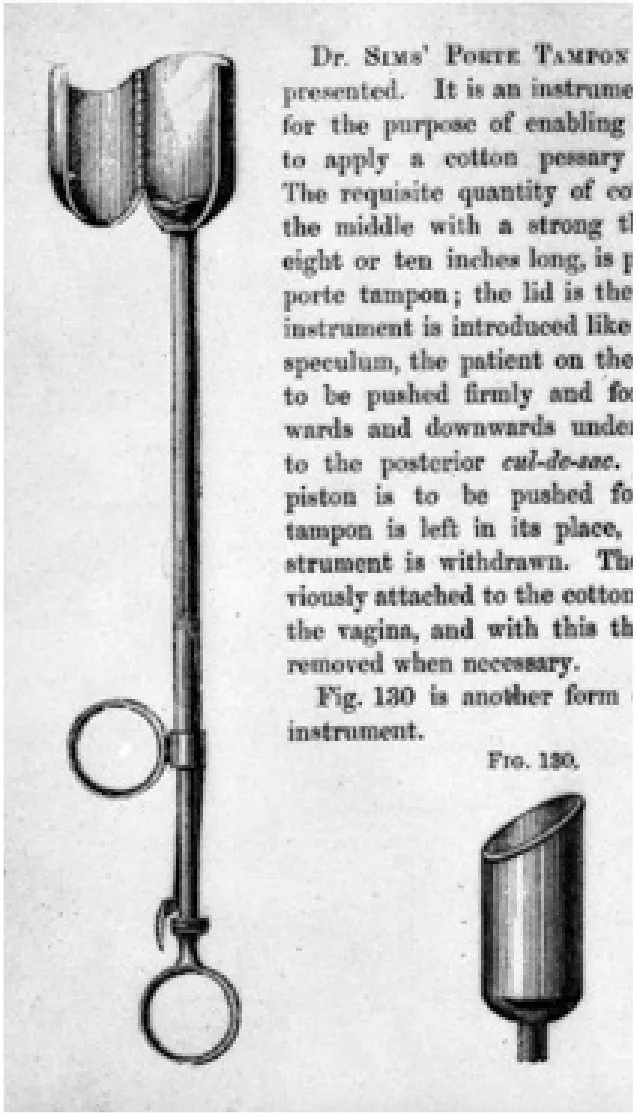
Sims made significant contributions to the field of gynecology by developing a cure for vesicovaginal fistulas which are a severe complication of childbirth. He is also credited for developing many gynecological tools (Figure 1), the first speculum, a commonly used gynecological tool today, and the catheter. In recent years, Sims’ methods have been scrutinized, leading to a change in public opinion about his place in history. Between 1845 and 1849 Sims conducted experimental surgeries on enslaved black women without their consent and without anesthesia, factors that raise significant ethical questions in more modern times. In 2018, following a review of controversial statues by a mayoral commission in New York City, Sims’ statue was removed from Central Park and moved to his burial place in Brooklyn. The commission noted “There is no question about the abuse of the women he experimented on.”This follows the removal of a painting of Sims from the University of Alabama, Birmingham in 2016. The legacy of Sims is dual-edged, balancing medical advancements against the need for ethical standards and informed consent in medical research. This shift has gradually taken shape over the years, leading to more rigorous consent policies created by ethical review boards in medical research today.
Sims became interested in treating vesicovaginal fistulas after noting the occurrence while treating a patient for an unrelated injury. A vesicovaginal fistula is a devastating condition resulting from prolonged or obstructed childbirth, where a hole forms between the bladder and the vagina, leading to the continuous, involuntary discharge of foul-smelling urine into the vaginal vault, severe social stigma, and health complications. At the time, there was no cure. To research the ailment, Sims needed bodies to experiment on. In 1845 he successfully negotiated with slave owners to experiment on their slaves “the owners agreeing to let me keep them (at my own expense) till I was thoroughly convinced whether the affection could be cured or not.” Slaves were the property of their slave owners and it was the slave owner’s consent, not the consent of the slaves themselves that Sims legally required for his experiments. A vesicovaginal fistula impacted a slave’s ability to work and have more children and therefore, diminished their value or ‘soundness’ to their owner. “ Being”sound “ meant”they produce (for men and women) and reproduce (for women). For these women having this fistula made them less sound.” Profitability and work output were of utmost interest to the slave owners, not the suffering and indignity of injuries caused by childbirth.
Whether these women wished to undergo treatment is unknown, and this is the crux of the power imbalance. They had no autonomy over their own lives and bodies. The inherent authority of the slave owners and a White male physician was wielded unethically against enslaved women. Sims wrote in The New York Medical Gazette and Journal of Health in January 1855, “For this purpose [therapeutic surgical experimentation] I was fortunate in having three young healthy colored girls given to me by their owners in Alabama, I agreeing to not operate without the full consent of the patients, and never to perform any that would, in my judgment, jeopardy life, or produce greater mischief on the injured organ” Whether the women were actually empowered to agree or disagree to participate in the research and treatments is questionable given the norms of the Antebellum era. As noted by the New York City Commission, “Free consent to participate in the experiments was not obtainable from women who were not free.”
Sims conducted experiments on twelve patients but of these women, only three are named in his records. They are Anarcha, Betsey, and Lucy. “I got three or four more to experiment on, and there was never a time that I could not, at any day, have had a subject for operation. But my operations all failed ... this went on, not for one year, but for two and three, and even four years.” All of these women endured numerous surgeries under excruciating conditions. We know from Sims’ autobiography The Story of My Life that Anarcha endured thirty surgeries. Anarchy’s was the only successful surgery after 3 years of experimentation. There is no information on how long Anarcha lived post-operation as her day of death had not been recorded. Over time, as Sims’ experiments continued to fail, the support of his medical peers fell away. Even his wife begged him to stop. Sims however was undeterred, and in the absence of professional medical assistants, his remaining course of action was to train Anarcha, Betsy, and Lucy to be his assistants during surgery and assign them to nurse each other and other patients during the post-surgery recovery period. Again, the women would not have had a choice on their work assignments. While residing with Sims, he had full authority over their bodies and their day-to-day activities.
The dehumanizing treatment of enslaved female patients in the operating room highlights the ethically concerning lack of respect and dignity perpetrated on the women under the guise of medical treatment and research. During surgery, the women were naked, strapped to a table, or held down in order to minimize their movements. In some instances, they were operated on in front of a room of White men. Their consent to be subjected to scrutiny by a room full of strangers was not contemplated. During the surgery, the patient faced forward on her knees, with her forehead resting on her hands. This position became known as ‘the Sims position’ There was no consideration for her right to privacy or dignity.
Pain management, or lack thereof during surgery is another example of how these women were dehumanized and abused. In line with the thinking of the time that Black people had a strong tolerance for pain, no anesthesia was administered. In his autobiography, Sims noted “Lucy’s agony was extreme. She was much prostrated, and I thought that she was going to die”. Anesthesia was not commonly used by physicians during the period of Sims’ surgical discovery. Durrenda Ojauna writes, “Sims was unaware of the advances which have been made in this area of medicine.” Many physicians also believed that patients could die if given anesthesia for their procedure. However, at the time of these experiments, there were other common anesthetics used during the Antebellum era but Sims did not see a need to use these methods of pain relief for his Black patients. For example, alcohol and opium were often used during pre-anesthetic surgery. These pain management options were known to be especially common during the Civil War which occurred after his experiments. One may argue that while anesthesia was not yet a reliable pain blocker, Sims could have used other sources of pain management medicine, but chose not to, in consideration for his patients.
After four years of experimentation, Sims finally perfected the surgery. When publicly reporting on his achievement, Sims omitted to acknowledge the role of the black slaves, either as patients or medical assistants. It should also be noted that when performing the surgery on white women, anesthesia was used. One theory is that White women received anesthesia because its use was more widespread by the time the surgery was perfected. Another line of thinking is the belief that white women had a lower tolerance for pain when compared to Black women. Today, discussing the reasoning behind Sims’ refusal to administer pain medication is the subject of debate. What is not debatable is the pain the women endured.
Although celebrated as “The Father of Gynecology’’Sims practiced in different fields such as dentistry, pediatrics, and general surgery. While experimenting on the enslaved women, he also extended his experiments into pediatrics. He mentioned in his autobiography, “I prefer researching children.’ His experiments on black children would today be classified as barbaric. It was a belief commonly held at the time that Black people were less intelligent compared to Whites due to the misconception that their skulls grew too quickly around the brain which was thought to be a symptom of lockjaw. In an effort to cure lockjaw or neonatal tetanus, Sims operated on infants using a shoemaker’s tool in an attempt to pry their bones open and loosen their skulls. The underlying cause of neonatal tetanus is malnutrition which was common among slaves and many children died as a result of his brutal treatment.
Ultimately, Sims did not care about positively impacting the lives of the slaves. He cared about his legacy and how his discoveries would enhance the lives of the white females who also suffered from vesicovaginal fistulas. When he had perfected his medical procedure, he sent Anarcha, Betsey, and Lucy back to their plantations and moved to New York where he opened the first-ever Woman’s Hospital in 1855. There, he continued to repair fistulas using anesthesia and gained a very positive reputation. However, if patients experienced any complications from surgery, he took no accountability, blaming instead “the sloth and ignorance of their mothers and the Black midwives who attended them.” Sims always had slaves to blame for his own errors.
At the start of the Civil War, Sims moved to Paris and continued to perform his life-changing surgery all over Europe, counting European royalty, including the Empress of Austria, among his patients. He returned to New York at the end of the Civil War and ultimately set up a private practice. In 1876, he became president of the American Medical Association and died in 1883.
By conducting research on enslaved women without their consent, and using their bodies to perfect his methodology, J. Marion Sims repeatedly abused his medical authority. His actions also entrenched a dangerous precedent of ethical disregard that has echoed through medical history. This historical abuse underlines the urgent need for ongoing vigilance and reform in medical ethics to prevent the recurrence of such injustices and ensure the protection of all patients’ rights. Sims’ experiments resulted in everlasting advancements in gynecology, in the treatment of vesicovaginal fistula, and in the development of medical tools. Before Sims’ work, there was no effective treatment or cure for the condition. Women suffered desperately both physically and mentally and they were shunned and isolated. He received global recognition for his achievements but the human cost of his success was not considered.
In recent years, Sim’s advancements in gynecology have recently been equally credited to “The Mothers of gynecology,” Anarcha, Betsy, Lucy, and the other unnamed heroines. The strength and resilience displayed by these women contributed to why many females are now living without this dreadful post-natal injury. Whereas in the past, statues and monuments were raised in honor of Sims, today, the contributions of Anarcha, Betsey, and Lucy are being celebrated in statues, paintings, and plaques. As we have learned, they were not just passive ‘guinea pigs’ being experimented on; they were also trained and skilled surgical assistants and nurses. Acknowledging the inhumane treatment of marginalized women in medical history is crucial, not only for acknowledging these grave injustices to begin the healing process, but also to ensure that their contributions and strength are not overlooked.
Was Sims a monster or a man of his time? His legacy is today overshadowed by the ethical implications of his methods, specifically the absence of informed consent, empathy, respect for the patient, and respect for their dignity. While the suffering endured by the women he experimented on cannot be disputed or forgiven, Sims’ approach to experimentation and research was the norm during that period.
Sims grew up in and practiced medicine in the Antebellum South. Slaves were property, with no rights or freedoms. Decisions regarding their existence remained solely at the discretion of the slave owner. Medical experimentation on enslaved people was encouraged without penalty or recourse. The South Carolina Medical Office even set up a medical office to enable medical experiments on both free and enslaved blacks. The purpose of the rooms was not to improve the lives of the patients, but instead to promote medical education. Sims didn’t feel it necessary to document the names of all the slaves he experimented on. To him, they were just bodies, not worthy of recognition. Having perfected his techniques, he did not publicly acknowledge the role played by Anarcha, Betsey, and Lucy as his medical assistants in his experiments. After years spent perfecting his technique, these women were discarded and sent back to their owners.
Sims also subscribed to the common thinking at the time that Black people did not feel pain the same way as Whites, ignoring the obvious distress and suffering of his patients. Having finally and successfully cured Anarcha, he attempted the same surgery on three White women, but in all cases, had to halt the surgery because the women could not endure the pain. It could be argued that in the case of White women, he recognized their duress, but for his Black patients, he was doggedly determined to complete the surgery.
Sims’ work serves as a critical reminder of the importance of ethics in medical research, emphasizing that the ends do not always justify the means. There are basic human rights that should be granted to each human being and not ignored for the greater good. Sims and many others throughout history looked away from that view and treated their patients with brutality, as if they were not even human. Sims’ experiments catalyzed not only advancements in medical tools and techniques but also the development of ethical standards that aim to protect patients in clinical research and practice. Sims’ torturous experiments stemmed from the lack of humanity his eyes had on the world. The three women especially lived their lives in pain so the future of females could be restored.
Equitable practices are recognized as being essential in modern medicine. By understanding and acknowledging past abuses, such as those perpetrated by J. Marion Sims, society is better positioned to enforce guidelines. Today, patient autonomy is safeguarded, and informed consent is required and prioritized, thereby preventing the repetition of such historical atrocities and fostering a more just medical community.Contemporary medical practices are grounded in ethical principles and respect for all human beings.
Figures
Citations
- Appelbaum, Jenna. “Vesicovaginal Fistula.” In The Multimedia Encyclopedia of Women in Today’s World, edited by Mary Zeiss Stange, Jane E. Sloan, and Carol K. Oyster. Thousand Oaks, CA, USA: Sage Publications, 2013. Credo Reference.
- Benlloch, Vincent. “Born Dead: The Culture of Slavery in American Medicine, Then and Now.” Health & Medicine in American History (blog). Entry posted May 23, 2016. Accessed March 29, 2024. https://lewiscar.sites.grinnell.edu/HistoryofMedicine/uncategorized/born-dead-the-culture-of-slavery-in-american-medicine-then-and-now/.
- Domonoske, Camila. “’Father Of Gynecology,’ Who Experimented On Slaves, No Longer On Pedestal In NYC.” Npr (blog). Entry posted April 17, 2018. Accessed April 19, 2024. https://www.npr.org/sections/thetwo-way/2018/04/17/603163394/-father-of-gynecology-who-experimented-on-slaves-no-longer-on-pedestal-in-nyc.
- Encyclopedia of Alabama. Last modified March 12, 2007. Accessed April 19, 2024. https://encyclopediaofalabama.org/article/j-marion-sims/.
- Goliszek, Andrew. “Medical Experimentation.” In Encyclopedia of Race and Racism, 2nd ed., edited by Patrick L. Mason. Farmington, MI, USA: Gale, 2013. Credo Reference.
- Harlem World, March 2014. Accessed April 19, 2024. https://www.harlemworldmagazine.com/dr-j-marion-sims-founder-womens-hospital/.
- Holland, Brynn. “The ‘Father of Modern Gynecology’ Performed Shocking Experiments on Enslaved Women.” History.com. Last modified August 29, 2017. Accessed April 19, 2024. L. L. Wall, “The medical ethics of Dr J Marion Sims: A fresh look at the historical record,” Journal of Medical Ethics, [Page #], accessed April 19, 2024, https://www.ncbi.nlm.nih.gov/pmc/articles/PMC1376165/.
- James Marion Sims. “Obstetrics, Porte Tampon for Application of Pessary.” JSTOR. https://jstor.org/stable/community.24806084.
- Mosley, Marlon. “Revisiting J. Marion Sims Medical Legacy.” African American History (blog). Entry posted September 15, 2020. Accessed April 19, 2024. https://mwmblog.com/2020/09/15/revisiting-j-marion-sims-medical-legacy/.
- National Center for Complementary and Integrative Health. https://www.nccih.nih.gov/health/providers/clinicalpractice.
- National Library of Medicine. Last modified December 2012. Accessed April 19, 2024. https://www.ncbi.nlm.nih.gov/pmc/articles/PMC4039689/.
- New-York Historical Society. “Life Story: Anarcha, Betsy, and Lucy.” Women & the American Story. Accessed April 5, 2024. https://wams.nyhistory.org/a-nation-divided/antebellum/anarcha-betsy-lucy/.
- Ojanuga, Durrenda. “The Medical Ethics of the ‘Father of Gynaecology’, Dr. J. Marion Sims.” Journal of Medical Ethics 19, no. 1 (1993): 28-31. JSTOR.
- Owens, Deirdre Cooper. “THE BIRTH of AMERICAN GYNECOLOGY.” In Medical Bondage: Race, Gender, and the Origins of American Gynecology, 15-41. N.p.: University of Georgia Press, 2017. https://doi.org/10.2307/j.ctt1pwt69x.6.
- ———. “BLACK WOMEN‘S EXPERIENCES in SLAVERY AND MEDICINE.” In Medical Bondage: Race, Gender, and the Origins of American Gynecology, 42-72. N.p.: University of Georgia Press, 2017. https://doi.org/10.2307/j.ctt1pwt69x.7.
- Savitt, Todd L. “The Use of Blacks for Medical Experimentation and Demonstration in the Old South.” The Journal of Southern History 48, no. 3 (1982): 331-48. https://doi.org/10.2307/2207450.
- Sims, James Marion. Clinical Notes on Uterine Surgery: With Special Reference to the Management of the Sterile Condition. Edited by Francis A. Countway Library of Medicine. N.p., 1866.
- ———. Story of My Life. N.p., 1884.
- Staff, Mutter Edu. “james Marion Sims: Father of Modern Gynecology or Abuser?” The College of Physicians of Philadelphia (blog). Entry posted September 24, 2020. Accessed April 19, 2024. Camila Domonoske, “’Father Of Gynecology,’ Who Experimented On Slaves, No Longer On Pedestal In NYC,” Npr (blog), entry posted April 17, 2018, accessed April 19, 2024, Brynn Holland, “The ‘Father of Modern Gynecology’ Performed Shocking Experiments on Enslaved Women,” History.com, last modified August 29, 2017, accessed April 19, 2024, L. L. Wall, “The medical ethics of Dr J Marion Sims: A fresh look at the historical record,” Journal of Medical Ethics, [Page #], accessed April 19, 2024, https://www.ncbi.nlm.nih.gov/pmc/articles/PMC1376165/.
- Vergano, Dan. “Cruel Medical Experiments On Slaves Were Widespread In The American South.” BuzzFeed News. Accessed March 29, 2024. https://www.buzzfeednews.com/article/danvergano/cruel-medical-experiments-on-slaves-were-widespread-in-the-a.
- Wall, L. L. “The medical ethics of Dr J Marion Sims: A fresh look at the historical record.” Journal of Medical Ethics. Accessed April 19, 2024. https://www.ncbi.nlm.nih.gov/pmc/articles/PMC1376165/.
- ———. “The Medical Ethics of Dr J Marion Sims: A Fresh Look at the Historical Record.” Journal of Medical Ethics 32, no. 6 (2006): 346-50. https://doi.org/10.1136/jme.2005.012559.