Sociology
From Dropout to Diploma: Reducing the Number of Dropouts & Engaging At-Risk Students
Summary
Draft summaryThis paper reviews high school dropout rates in the United States, with attention to Massachusetts, and their economic costs to individuals and to society. It argues that incentives such as financial aid and college credit, together with tutoring, mentoring and counseling for at-risk students, would lower the cost of staying in school.
High school dropouts represent a significant challenge in the United States, both socially and economically. Though the reasons behind students’ dropping out of school may vary, the long-term consequences of not fully completing high school are extensive for individuals and society. Stacey Teicher Khadaroo’s article “Reaching Out to Dropouts” highlights the difficulties many students face and explores the potential solutions to dropouts. This article aims to update these perspectives by investigating the current state of high school dropouts in the United States with a focus on Massachusetts specifically and analyzing the economic consequences of these choices, while examining the critical thinking questions regarding the trade-offs that students face and the importance of engaging at-risk high school students.
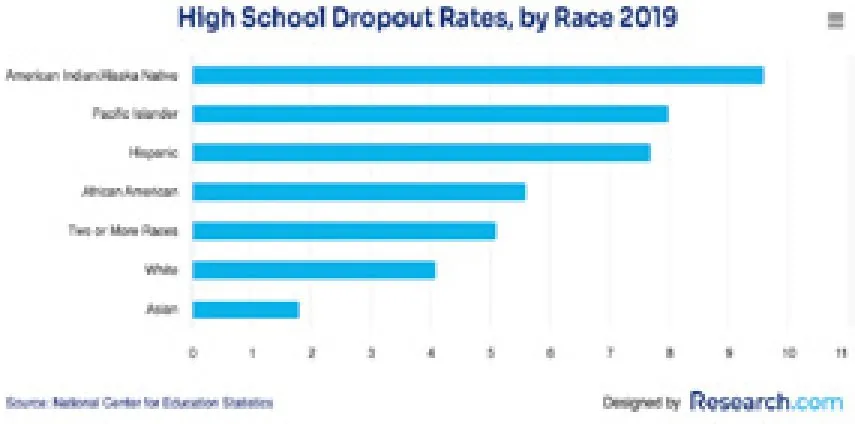
High school dropout rates remain a significant issue in the United States, with far-reaching economic consequences. Data from 2025 shows that the overall dropout rate among students aged 16-24 is around 5.1%. Although this number reflects improvement from previous decades, there is still a concerning number of students who leave high school before receiving a diploma. In particular, those who identify as American Indian/Alaska Native have the highest dropout rate at 9.6%. In the state of Massachusetts specifically, the 2022-2023 school year revealed that 2.3% of high school students dropped out of school. Massachusetts is performing better than the national average (5.1%), suggesting that elements such as education policies and access to resources may contribute to the lower rate. However, these 2.3% of high school dropouts in the state of Massachusetts still represent a significant number of students who leave school before receiving a diploma. This statistic highlights that there is still work to do to decrease dropout rates further. According to the National Center for Education Statistics, the graph below displays the high school dropout rates by race from 2019:
To incentivize staying in school, schools and governments can make the personal benefits of doing so. For example, financial aid, scholarships, or opportunities to receive college credits can help lower the opportunity cost of remaining in school. Though students tend to perceive the immediate rewards of leaving school as more valuable, these strategies can offer tangible benefits that allow students to shift their focus to the long-term rewards of education. This approach makes the trade-offs between dropping out and staying in school less intimidating, as more students will realize that effort and time spent on education can lead to a more financially fulfilled future. Thus, the chances of students completing their education rise and will benefit both individuals and society. Along with these strategies to help at-risk high school students achieve college credits, programs such as tutoring, mentoring, and counseling can further empower students which can help them navigate challenging coursework and keep them engaged.
While providing incentives to students so that they can complete their education, it is equally important to consider the broader societal costs of dropping out of high school. These costs extend beyond the students who drop out, affecting the public community and resources. Without a high school diploma, individuals are more likely to face unemployment. In addition, data revealed that people who advance in high school levels tend to possess strong skills that can give access to more higher paying jobs. Higher graduation rates are strongly associated with lower crime rates and reduced reliance on government assistance, including food, housing, or unemployment benefits, which creates a more stable community. As a result, society can save more money and allocate these resources elsewhere.
Reducing the number of high school dropouts is essential for both individuals and society as a whole. By offering incentives like financial aid and opportunities to receive college credits, the opportunity cost will be lower, and students will stay in school while gaining the long-term benefits of education. Additionally, helping at-risk students navigate the trade-offs of completing their education through support programs like tutoring and counseling can provide students with the tools they need to succeed. Ultimately, the societal benefits from staying in school and reducing dropout rates make it clear that investing in the future of education for at-risk students is also an investment in the future of our economy and society. By taking the aforementioned steps, policymakers can help more students to succeed to their full potential.
Figures
Citations
- Opinion | The True Cost of High School Dropouts - The New York Times
- High School Dropout Rate Is Decreasing but Race, Income & Disability Issues Persist for 2025 | Research.com
- 2022-23 Student Dropout Rate Report - Massachusetts (00000000)
- Why Students Drop Out - National Dropout Prevention Center
- The True Cost Of Dropping Out Of High School