History
The Destructive and Regressive Nature of Marxism
Summary
Draft summaryThis paper argues that Marxism, as Marx conceived it and as Lenin and Stalin revised it, is inherently destructive and regressive, and that Stalinism extended its tendencies rather than betrayed them. It closes by urging present-day progressives to reckon with that history instead of viewing communism “through rose-colored glasses.”
Contents
An Introductory Background
Bloodshed and volatility are apt descriptors of 19th-20th century Europe. The volatile political unrest of the 1800s led to a wave of newfound political ideologies: namely, that of Marxism in 1848. The case of Marxism seeks to respond to volatility and suffering through repression and social destruction. Karl Marx, having had a falling out with religion, and a philosophical intrigue in the devil, had a predisposition to destruction. Ultimately, his ideas grew to influence the Bolshevik Revolution, and were re-interpreted by Lenin; however, the primary doctrine of Marxism -destruction and repression- remains integral. In the case of the Soviet Union, the world’s first structured Communist nation, which emerged from the Russian Revolution, authoritarianism walked hand in hand with Marxist-Leninism. Both Lenin and later Stalin build off of Marxism, and their ideologies become highly reversionary. What is perplexing to many about Stalinism is that some believe it contradicts the desires of Marxist-Leninism. However, Stalinism simply builds off of Marxism and Leninism, and takes the destructive and repressive tendencies to an extreme as a means to consolidate power. All three ideologies prove to be inherently destructive and regressive. Importantly, modern age progressives must understand this as the influx of modern Marxist Progressives and Leninist apologists is detrimental to the progressive goals of many on the left.
Understanding Marx’s Pre-Manifesto Ideology
Karl Marx created the first glimpse of the Communist vision, and built it to be inherently regressive and destructive. While a more modern view of Marx places him as forward thinking and bringing about inherent good, More classical historians viewed Marx quite differently. In his time at University of Bonn (1836) studying under Bruno Bauer, Marx solidified his disenchantment with religion, and became enchanted with an atheistic admiration of the devil. His theological ideology is incredibly nuanced as his poetry often evoked a Miltonian Satan which Marx would write from the perspective of. In his poem Invocation of One in Despair (written 1836-1837), Marx writes “I wish to avenge myself against the One who rules above” in a soliloquy speaking on the despotic nature of God from the lips of a prelapsarian post heavenly revolt Satan. This line is seemingly inspired off of the soliloquy of Satan in Book 4 of Paradise Lost, and most definitely illustrates a predisposition towards destruction -the same purpose it serves in John Milton’s poem. Marx found the world inherently cruel, though he was an atheist, so his writing against a despotic God seemed perplexing. Well, Marx may be referring to the general world when he writes against God. First of all, Marx was born in Trier, Germany. Trier is a heavily Christian town formerly home to St Helena, home to Emperor Constantine during his Christian conversion, and home to the supposed robes Christ wore during his crucifixion. To Marx, the world is subject to the Judeo-Christian God’s influence, and so when he speaks against God, he is really speaking against society. This may seem to be a slight overreach; however, Marx builds dramatically upon this initial Satanic destructive philosophy.
Particularly, Marx took a liking to Johann Wolfgang von Goethe’s Mephistopheles -a character of German Folklore who symbolizes the devil. It is said that Marx had a particular affection for the character of Mephistopheles, especially Mephistopheles’ quote from Faust: “Everything that exists deserves to perish” which some have even prescribed as Marx’s favorite quote in all of literature., This fact is unanimously viewed as important across the ideological spectrum -left wing scholars such as Robert Payne as well as conservative scholars such as Dr Jordan B. Peterson both view this line as critical to Marxist philosophy. Mephistopheles views existence as always leading to suffering, and thereby views existence to be inherently malicious and painful. Through this view of existence, Mephistopheles views civilization as in need of being destroyed as a whole. Marx definitely was influenced heavily by Faust. His Father, Hienrich Marx, even asks him in a letter written just seven months after Marx finishes writing “Invocation of One In Despair” “...since [your] heart is obviously animated and governed by a demon not granted to all men, is that demon heavenly or Faustian?”(1837) While this could be viewed as a playful joke towards his son, Hienrich writes the letter out of genuine constant worry for his son. Additionally, the view of Marx as being a demon is not uncommon in Marx’s colleagues, so his father being genuinely concerned about him in this regard would not be abnormal. Marx’s son addressed him in a letter as “my dear devil” his colleague Karl Heinzen referred to him as a “wet Goblin…chanting words from faust,” and Fredrich Engeles described him as a dark man from Trier who is the “monster of 10,000 devils” after the two first met. It seems as though Marx had been consumed by the faustian demon -not necessarily in a theological literal sense, but definitely ideologically- and his faustian devilishness was so deep that it could be viewed upon first notice by strangers and also noticed by his close family. This makes a lot of sense in the context of his future writings. The faustian vision directly builds upon the ideology established in his poetry. Contrary to what his early life alludes to, the literal existence of God is actually not important to Marxist ideology at all. The world is destructive in the eyes of Marx, and the existence of a being who created it is irrelevant. Due to the evil of current existence, everything currently existing must be destroyed, and Marx must be the catalyst.
The Communist Manifesto
In the Communist Manifesto (1848), Marx truly hones the Faustian demonic muse and wrote a social regressive and inherently destructive ideological manifesto. Marx began the Manifesto by stating that the “spectre of Communism” is “Haunting Europe” and will eventually be “exorcise[ed].” This places Marxism to be similar to a ghastly warning -the archetypal calm before the storm. It places the Communist revolution as inevitable, as this demon will be exorcised eventually, and as the threat is supernatural -therbye, the threat is also above the paygrade of man. Marx argues at the end of the text that a utopian vision can only be achieved through the “...forcible overthrow of all existing social conditions.” This idea is the threat. It is the direct continuation of his demonic poetry, and Marx argues it is inevitable. Many argue that Communism is forward thinking as it looks to reinterpret society -society which is deemed to cause suffering to the proletariats. However, in reality, it is inherently backwards and regressive as it seeks to destroy everything until no semblance of the past exists. This may abolish some suffering, but it will also abolish all goodness, all current knowledge, and -most importantly- it will abolish all of the progress -medically, scholarly, metaphysically, socially, ect- which currently exists. Furthermore, In arguing for a ‘forcible overthrow’ not even a democratically consented destructive refiguring will take place, but an involuntary holistic destruction. The ideology is the most radical possible political movement, and it is the antithesis of the wave of progress and need for democratic consent considered forward thinking since the enlightenment. Mephistopheles also seeks for destruction of all that exists -in his case all that is created under God- to end supposed suffering. The philosophical issue which Goethe presents is that to end existence, more suffering will arise. Marx’s ideology also falls victim to this. Inherently, to end all of current society, suffering will take place. Marx attempts to mask this contradiction by phrasing the onslaught of destruction not as a deletion of progress, but as an opportunity for the proletarians to “lose their chains” as they have nothing else to lose. This shifts to focus on a potential end of current suffering, not the plentiful new suffering which will come. This is actually very reminiscent of not strictly Mephistopheles, but also Marx’s early poem The Fiddler (Published in ‘Wild Songs’ 1841) where a musician sells his soul to the devil -the archetypal meeting at the faust inspired crossroads- to be talented at his instrument, and while he achieves that skill, he does it at the cost of the rest of the joy in his life. Ultimately, to achieve the Marxist vision, a crossroads like deal must be made where all of civilization must be sacrificed, and an incredible increase to suffering is inevitable in this sacrifice.
The Revision of Marxism (Marxist-Leninism)
The political situation prior to the Russian Revolution was able to be molded by Vladimir Lenin into a redefinition of Marx’s hypothesized workers revolution, molding it to center not on workers against the factory owners, but to center on peasants against the bourgeoisie - this ideology is now known as Marxist-Leninism. It seems as though Lennism is separated enough from Marxism that it could be described as revisionist, and thereby not adhering to many of Marxism’s core principles. The Lennists tried hard to reckon with this, as Marx was a beloved character, and so through not adhering to his doctrine, one would quickly lose support and be viewed as anti-revolutionary. Joseph Stalin, the People’s Commissariat of Nationalities of the USSR under Lenin, described Leninism as the “Marxism of the era of imperialism and the proletarian revolution. To be more exact, Leninism is the theory and tactics of the proletarian revolution in general.” Whilst Stalin prefaces this statement as proof of Leninism not being revisionist, it actually supports the revisionist point very nicely. First of all, the classification proletariat refers to one who is required to sell their labor to the bourgeoisie factory owners as a means to get by; however, they will never own any means of production, nor will they consume the product by which they produce., By this definition -contrary to what Stalin argues- the Russian Revolution was not a proletariat revolution, but rather, it would be classified as a populist revolution. It is adjacent to a left leaning social-populist definition focusing on “anti-elitist sentiments, opposition to the establishment and speaking for the common people,” though, it can also apply to a more conservative definition: creating a movement which is ment to mirror the most popular opinions in a given society. The revolution was fought against a tyranny of the Romanov Royal Family and of the Ruling Class -the minority (around 12% of the population)- and fought by the substantially larger non gubernatorial Russian citizenry (82% Peasant, 1% Kulak, 1.5% Middle Class, and 4% Working class). The revolutionaries were not classified by their acquisition of labor, nor were they classified by their lack of consumption, they were classified by being subjects of the Tsar, and by being the majority. The abundant peasantry is not the proletariat, they are viewed differently, and with disdain by Marx and Engles, and thereby the revolution is not even a populist proletariat revolution -a revolution where the proletariat is the most abundant group. The proletariat is the 4%, the working class, who applies their labor though does not reap benefits or own factors of production like the middle class does; they are not the peasantry. As previously stated, the revolution was to bring the views of the majority- the commoners.
Secondarily, Stalin describes that Leninism is “the theory and tactics of the dictatorship of the proletariat in particular.” In this definition, Stalin applied an incredibly tactical play: he completely redefined Marxism to be a means to amass power in an individual or small group, rather than a large comune. While this phrase, the dictatorship of the proletariat, was uttered by Marx, it was used interchangeably with the phrases “the rule of the proletariat” and “political power held by the working class” -both of which were used much more frequently. The definition which Stalin uses -as evidenced by his later time as General Secretary- is not Marxist. Marxism’s goal is to return the power to the workers, and to disband autocracy or oligarchy, not to empower an oligarchical body which attempts to represent the people. If Marxism is based on class struggle, and hopes to destroy all of society as a means to abolish class struggle, then creating a ruling class cannot occur. Furthermore, if Stalin’s definition of the Soviet dictatorship was accurate -which it was not, as slowly the dictatorship grew distant from the desires of the majority of Russia- Stalin would once again be describing an populist regime -albeit an authoritarian one. Therein, the Russian Revolution would not meet the Marxist definition -it is focused on the majority getting to enact their will, and ultimately get that will enacted through an authoritarian oligarchy. Marxist-Leninist theory began as the theory of authoritarian populism.
What Does Lenin Keep From Marx?
While Lenin departed from Marxism in many ways, the main core doctrine he kept is the need for destructive violence -though, it is viewed through a Stalinist lens. A good example of this violence is how Lenin responds to the issue of the 1918 food protests. In response to large scale starvation, protests began to rise in Petrograd (modern day St Petersburg) just a year into Lenin’s ruling of Russia. Lenin explained to Presidium of the Petrograd that “We can’t expect to get anywhere unless we resort to terrorism: speculators must be shot on the spot” The call for the destruction of society present in Marxism normalized violence as a means to an end, and Stalin’s revision of a dictatorship of the proletariat entitled the power to an organized gubernatorial body. Therein, centralized repressive violence is permitted, and grows to be the norm in these Marxist societies, even though Marx himself would not wish the repression to be centralized. As the citizenry grows dissatisfied with the conditions brought about by Communism -with the citizenry even voting against the Bolsheviks 75% to 25% in the 1917 Constituent Assembly elections-repressive violence becomes the only way to keep order. The Bolsheviks are no longer populist as their citizenry votes against them, and their proletariats become disenchanted. This moment is where Marxist-Leninism shifts from authoritarian populism to authoritarian repressive control. The shift, when practically applied, re-establishes the problem Marxism set out to eliminate in the first place -class disparities. With the risk of excessive reiteration, the Petrograd Food Protests serve as an incredible example of this oppressor, oppressed disparity. In those protests there is the proletariat -the workers- working with the hope of surviving -not starving to death- and beginning to face unsatisfactory working conditions -starvation. They then voice their concern to the ruling class, and are met with terroristic violent repression. The Bolsheviks become the oppressors, and the proletariats stay the oppressed.
The Logical Climax of Marxist-Leninism: Stalinism
Stalinism, though it is sometimes viewed as separate from the ideologies of Marx and Lenin, is intrinsically linked: it is not a new ideology, it simply builds off of Marxism and Leninism. While many different schools of thought exist on Stalinism, John Merriman of Yale University has a good base definition of this ideology. Merriman explains in his European Civilization lecture series that Stalinism primarily centers on having “Democratic Centralist” decision making while employing “State coercion [and] state terror.” Additionally, he argues it focuses on transforming an economically backwards society through an “obsession [on] heavy industries…built on the backs of the peasantry” who will eventually lose their private land and become industrial workers. This definition is a good starting point, and most definitely serves as the logical conclusion to Marxist-Leninism. Lenin himself actually feared Stalin being too extreme -and, most likely, as too far removed from Marxism. Lenin, in his testament written prior to his death in the aftermath of his first stroke, warned that Stalin should not be placed as General Secretary as “Comrade Stalin… has concentrated an enormous power in his hands; and I am not sure that he always knows how to use that power with sufficient caution.” Even Lenin, who was seemingly fine with authoritarian repression, viewed Stalin as dangerously domineering. Just a week later, Lenin added an additional postscript to his testament arguing that Stalin must be removed from the government. It seems perplexing Lenin would feel so passionately against Stalin.
The Application of Stalinism
The epitome of Stalinism is his Five Year Plan, and understanding it is crucial to understanding this ideology. The first Five Year Plan set out to collectivise agriculture, and shift the rural agrarian economy to an urban heavily industrialized manufacturing superpower., Ultimately, Stalin’s plan follows the ‘Guns and Butter’ economic model. In line with the Product Possibilities Frontier (PPF) curve, to increase military production as a means of strengthening national defense -which was the main utilitarian goal of industrialization- a tradeoff must be made, and domestic civilian goods must be sacrificed. With this model being mainly applied to agriculture, mass famine swept across the Soviet Union. In response, farmers began to resist collectivization and hoard their own crops, as they feared political unrest could lead to supply chain issues, and eventually to starvation. Stalin responded by sending some of these farmers -who he labeled ‘Kulaks’- to concentration camps, by deporting some to remote outskirts for required work in agriculture or industry, and by exiling some to infertile wetlands. In just three years, this response affected around 1.2 million people, and continued to affect people in the years afterwards. Stalin treated almost every problem he faced similarly: if there was any instability to his power, he would utilize mass violence and terrorism -more intense, or at least on a greater scale, than that hypothesized by Lenin- as a means to neutralize the threat. Furthermore, possibly due to mental illness, Stalin had intensive paranoia, and so widespread violence and repression became a near constant in the USSR. It seems as though this is what Lenin predicted in his Testament: Stalin was simply too repressive and power hungry to be a Marxist-Leninist. Therein, he spins off from Marxist-Lenisism creating Stalinism; a terror based industrial maximizing totalitarian military dictatorship. This very form of government is close to the epitome of an oppressor, and is actually much more radically oppressive than the factory owners of 1840s Germany or the ruling class of Tsarist Russia.
The Modern Importance of Understanding Marxism, Leninism, and Stalinism
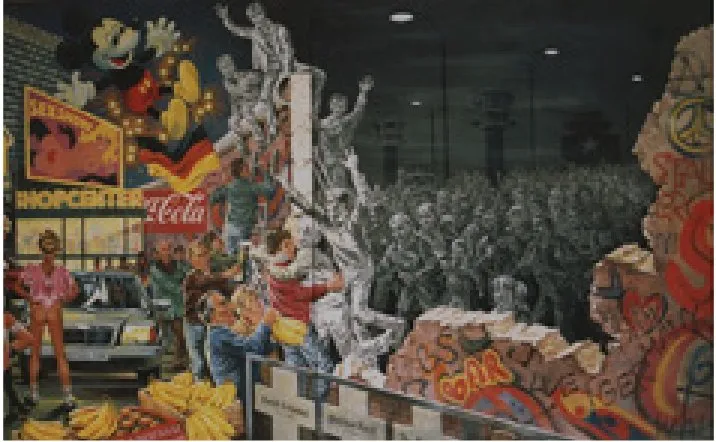
In the United States -as well as more broadly across the world- as of late, many left leaning progressives have become followers of Marx, and Lenin Apologetics; people have grown to view “Communism Through Rose-Colored Glasses.” For example, in 2018, Progressive Jason Barker wrote an opinion article in the New York Times arguing that modern progressivist ideas align with the ideas of Marx, and that Marx was “right.” Progressivism, however, could not be farther from Marxism; the two actually contradict each other. Marxism is inherently regressive, and destructive, whereas progressives desire progress. Where the pro-marxist misconception arises is in the idea of the oppressor oppressed archetype. Through some modern schools of thought, progressives view minority groups as the oppressed, and dominant groups as the oppressors. The reason this misconception is so strong, is because historically and currently -within non-marxist definitions- this has proven true; the hate which minorities get is oppressive, and there are oppressors causing it. Marxism, however, would not provide the desired solution. Often modern progressives seek equity, where the marginalized can be holstered up to account for past oppression. Marxism does not deliver equity. Rather, Marxism delivers equality in poverty, where both the minority and the dominant group become equally poor, and the oppressed are not upholstered at all. This is not a progressive dream in the slightest. It is Faustian: it causes greater poverty and suffering, not less. Additionally, the ‘Lenin Apologists’ do not stand on solid footing. In an article for Current Affairs in response to an article by Bret Stephens, Socialist Nathan J. Robinson argues that Stephens is right about one thing: some fellow left leaning people justify Marx and Lenin as progressive, and they shouldn’t. Robinson argues that the socialism progressives seek -that of welfare programs, equity, increased social services, and increased well being- is not Marxism, nor is it Leninism, and to argue for either of those is actually contrary to progressive socialism. The political right is incredibly accurate in their assessment of the dangers of Marxism. It seems, while there are certainly critiques of Socialism -even from the lens of how it affects national progress- it is important for those who seek social progress to not fall into the trap of supporting Marx or Lenin -the two are inherently contradictory to the goals of both the American Right, and the American Left. Being a socialist does not require being a Marxist, or supporting Lenin. There is an incredible symbol of the danger of the Marxist and Leninist ideas contrasted against the opportunity of Western Liberal ideas visible in the past. In the aftermath of the Second World War, Germany was split between the Western powers and the Eastern USSR by the Berlin Wall. The wall was described in East German propaganda as protecting Eastern freedom, serving as an “antifascist protective rampart” to keep out Western Fascism. However, this proved inaccurate, and the living conditions in East Germany were repressive and dystopian, compared to a much more progressive West Germany. Ultimately, the purpose of the wall was to concede West Germany between the progressive Western Powers, and keep The West from destroying the power of the regressive Eastern USSR regime; ultimately, the wall did not serve to protect against a wave of fascism, but to block a wave of progressive freedoms from eroding the Soviet Dystopia.
Figures
Citations
- Adelman, Jeremy, Elizabeth Pollard, and Robert L. Tignor. Worlds Together, Worlds Apart : a History of the World from the Beginnings of Humankind to the Present. 6th ed. New York City, NY: W. W. Norton & Company, 2021.
- Allen, Rachael. “Stalin and the Great Terror: Can Mental Illness Explain His Violent Behavior?” Boston University Guided History. Boston University. https://blogs.bu.edu/guidedhistory/russia-and-its-empires/rachael-allen/.
- Allmon, Benjamin. “DEVIL in the DETAIL: A History of Musicians and the Crossroads.” Opossum Lit. Last modified Spring 2018. https://opossumlit.com/devil-in-the-detail-a-history-of-musicians-and-the-crossroads/.
- Armstrong, Sean. “Stalin’s Witch-Hunt: Magical Thinking in the Great Terror.” Totalitarian Movements & Political Religions, December 2009. Website.
- Avrutin, Eugene M., Jonathan Dekel-Chen, and Robert Weinberg, eds. Ritual Murder in Russia, Eastern Europe, and Beyond - New Histories of an Old Accusation. Indiana University Press, 2017. pdf.
- Barker, Jason. “Opinion: Happy Birthday, Karl Marx. You Were Right!” The New York Times. Last modified April 30, 2018. https://www.nytimes.com/2018/04/30/opinion/karl-marx-at-200-influence.html.
- “THE BATTLE OF BUDAPEST (1956).” Video, 3:19. British Pathé.
- BBC. “Imperial Russia - Government and people: Class divisions in Russia.” BBC Bitsize. https://www.bbc.co.uk/bitesize/guides/z6rjy9q/revision/4.
- Becker, Tom. “Guns and Butter 2.0.” BlackRock. Last modified March 8, 2023. https://www.blackrock.com/us/individual/insights/guns-and-butter#:~:text=What%20is%20Guns%20and%20Butter,must%20choose%20between%20the%20two.
- Carr, W. “Peasants and Lords in Modern Germany Review.” Oxford University English Historical Review 102, no. No. 402 (1987): 145. https://www-jstor-org.ezproxy.milton.edu/stable/572432?seq=1.
- Chamlee-Wright, Emily. “What Berlin Wall propaganda can teach us about freedom.” The Hill. Accessed November 8, 2019. https://thehill.com/opinion/civil-rights/469566-what-berlin-wall-propaganda-can-teach-us-about-freedom/.
- Chappell, Dennis D. Case White: The Invasion of Poland, 1939. Gale Academic OneFile, 2021.
- Daniel, Aleksander. “Brutal Crime against Rural Life: Collectivisation in the Soviet Union.” Communist Crimes. https://communistcrimes.org/en/brutal-crime-against-rural-life-collectivisation-soviet-union.
- Getty, J. Arch, Oleg V. Naumov, and Benjamin Sher. The Road to Terror : Stalin and the Self-destruction of the Bolsheviks, 1932-1939. Updated and abridged ed ed. New Haven [Conn.]: Yale University Press, 2010.
- Goethe, Johann Wolfgang von. Faust: Der Tragödie erster Teil. https://www.gutenberg.org/files/2229/2229-h/2229-h.htm.
- Hampton, Paul. “The truth about Marxism and religion.” Workers’ Liberty: Reasons in Revolt. Alliance for Workers’ Liberty. Last modified March 25, 2006. https://www.workersliberty.org/story/2017-07-26/truth-about-marxism-and-religion#:~:text=Marx%20broke%20with%20Bauer%20in%20late%201842,to%20the%20political%20realities%20of%20the%20time.&text=The%20final%20break%20came%20in%20March%201843,on%20the%20masses%20and%20on%20political%20activity.
- “The International Significance of the Five-Year Plan.” Marxist Archives: Stalin Archives. https://www.marxists.org/reference/archive/stalin/works/1933/01/07.htm.
- Johnstone, Monty. “The Paris Commune and Marx’s Conception of the Dictatorship of the Proletariat.” The Massachusetts Review 12, no. No. 3 (1971): 447-62. https://www-jstor-org.ezproxy.milton.edu/stable/25088139?seq=1.
- Keefe, Joshua R. “Stalin and the Drive to Industrialize the Soviet Union.” Inquires Journal Vol. 1, no. No. 10 (2009): 1. http://www.inquiriesjournal.com/articles/1684/stalin-and-the-drive-to-industrialize-the-soviet-union#:~:text=Marxist%20theory%20aside%2C%20the%20need,a%20life%20or%20death%20struggle.
- Kengor, Paul. The Devil and Karl Marx : Communism’s Long March of Death, Deception, and Infiltration. Gastonia, NC: Tan Books, 2020.
- Kengor, Paul, Dr. “The Devil and Karl Marx.” Interview by Jordan B. Peterson, Dr. Transcript Via: The Singju Post. Last modified June 14, 2024. https://singjupost.com/the-devil-and-karl-marx-dr-paul-kengor-full-transcript/?singlepage=1.
- “Left-Wing Populism.” European Center For Populist Studies. https://www.populismstudies.org/Vocabulary/left-wing-populism/.
- Lenin, Vladimir. “The Constituent Assembly Elections and The Dictatorship of the Proletariat.” Marxist Archives. https://www.marxists.org/archive/lenin/works/1919/dec/16.htm.
- ———. “Meeting Of Presidium Of The Petrograd Soviet With Delegates From Food Supply Organisations.” Marxist Archives. https://www.marxists.org/archive/lenin/works/1918/jan/14.htm.
- ———. “The Testament of Lenin.” Marxist Archives. Last modified January 1923. https://www.marxists.org/history/etol/newspape/ni/vol02/no01/lenin.htm.
- “Lenin Internet Archive - ‘Last Testament’ Letters to the Congress.” Marxist Archives. https://www.marxists.org/archive/lenin/works/1922/dec/testamnt/index.htm.
- Lennox, Dennis. “48 hours in Trier: Saints, holy relics and Roman ruins.” The Christian Post. Accessed June 2, 2019. https://www.christianpost.com/news/48-hours-in-trier-saints-holy-relics-and-roman-ruins.html.
- Machiavelli, Niccolò. The Prince. Translated by Luigi Ricci. Oviedo, Asturias: King Solomon, 2021.
- Marshall, Winston. “Winston Marshall argues that populism is not a threat democracy, but rather is democracy itself.” Speech, Oxford Union, Oxford University, UK, May 8, 2024.
- Marx, Heinrich. “Letter from Heinrich Marx to son Karl.” Marxist Archive. https://marxists.architexturez.net/archive/marx/letters/papa/1837-fl2.htm.
- Marx, Karl. “Early Works of Karl Marx: Book of Verse - 1. The Fiddler.” Translated by Jim Esch. Marxist Archives. https://www.marxists.org/archive/marx/works/1837-pre/verse/verse4.htm.
- ———. “The Paris Commune: First Proletarian Dictatorship.” Marxist Archives. https://www.marxists.org/history/erol/ncm-5/rcp-paris-commune.htm.
- Marx, Karl, and Friedrich Engels. The Communist Manifesto. New York: Fall River Press, 2023.
- Merriman, John. “European Civilization, 1648-1945 HIST 202 - Lecture 21 - Stalinism Chapter 1. The Formation of the Leninist State: Democratic Centralism and the New Economic Policy.” Open Yale Courses. Yale University. Accessed April 2, 2025. https://oyc.yale.edu/history/hist-202/lecture-21.
- Miami University. “1917-2017 Centennial of the Russian Revolution.” Miami University Database. https://miamioh.edu/cas/centers-institutes/havighurst-center/additional-resources/havighurst-special-programming/1917-centennial/index.html.
- Milton, John. Paradise Lost : Authoritative Text, Sources and Backgrounds, Criticism. 2nd ed. Edited by Gordon Teskey. New York, N.Y.: W. W. Norton & Company, 2020.
- Orwell, George. 1984. 75th Anniversary ed. New York, N.Y.: New American Library, 1961.
- Pasley, James. “You can still see the divide between West and East Berlin from space.” Business Insider. Last modified November 8, 2019. https://www.businessinsider.com/divide-between-west-east-berlin-from-space-today-2019-11.
- Payne, Robert. Marx: A Biography. New York City, NY: Simon and Schuster, 1968. The Internet Archive.
- Peter Boisseau. “Secret documents enable U of T historian to shed new light on Stalin’s Great Terror.” University of Toronto. https://www.utoronto.ca/news/secret-documents-enable-u-t-historian-shed-new-light-stalin-s-great-terror.
- Purdue University. “Terms Used by Marxism - Introductory Guide to Critical Theory.” Purdue University College of Liberal Arts. https://www.cla.purdue.edu/academic/english/Theory/marxism/terms/termsmainframe.html.
- Roberts, B. R. “Peasants and Proletarians.” Annual Review of Sociology 16, no. 1 (1990): 353-77. https://doi.org/10.1146/annurev.so.16.080190.002033.
- Robinson, Nathan J. “How To Be A Socialist Without Being An Apologist For The Atrocities Of Communist Regimes.” Current Affairs. Last modified October 25, 2017. https://www.currentaffairs.org/news/2017/10/how-to-be-a-socialist-without-being-an-apologist-for-the-atrocities-of-communist-regimes.
- Rose, Cooper. “Why Propaganda Changed How We Viewed The Berlin Wall.” Medium. Last modified November 26, 2018. https://medium.com/@catiecooper1414/why-propaganda-changed-how-we-viewed-the-berlin-wall-65be231ce6b5.
- Service, Robert. Stalin : A Biography. Cambridge, MA: Belknap Press of Harvard University Press, 2006.
- “Slave Of USSR Tattoo - Hammer and Sickle Tattoo / Anti Communist Tattoo / Shackled Hands Tattoo / Russian Criminal Tattoo / Soviet Union.” Etsy. https://www.etsy.com/listing/694577785/slave-of-ussr-tattoo-hammer-and-sickle.
- Stalin, Joseph. “Concerning Questions of Leninism.” Marxist Archives. https://www.marxists.org/reference/archive/stalin/works/1926/01/25.htm#1b.
- “Stalin Internet Archive.” Marxist Archive: Stalin Archive. https://www.marxists.org/reference/archive/stalin/works/decades-index.htm.
- Stephens, Bret. “Opinion: Communism Through Rose-Colored Glasses.” The New York Times. Last modified October 27, 2017. https://www.nytimes.com/2017/10/27/opinion/communism-rose-colored-glasses.html?_r=1.
- The University of Chicago. “Industrialization and Collectivization - Adventures in Soviet Imagery.” U Chicago Library. https://www.lib.uchicago.edu/collex/exhibits/soviet-imaginary/technology/industrialization-and-collectivization/#:~:text=In%201928%20Stalin%20introduced%20an,energy%20generation%2C%20and%20steel%20production.
- The University of Waterloo. “The First Five Year Plan, 1928-1932.” University of Waterloo Library. https://uwaterloo.ca/library/special-collections-archives/first-five-year-plan.
- “Vladimir Ilyich Lenin 813 To: COMRADE STALIN.” Marxist Archives. Accessed April 4, 2025. https://www.marxists.org/archive/lenin/works/1923/mar/05.htm.
- Wood, Alan. Stalin and Stalinism. 2nd ed. New York: Routledge, 2005.
- Wurmbrand, Richard. Marx and Satan. Westchester, Ill: Crossway Books, 1986.