History
Tracking the Formation of a Culture of Exterminability in Armenia from 1878 to 1915
Summary
Draft summaryThis paper applies Ghassan Hage’s concept of a “Culture of Exterminability” to the Ottoman Empire between 1878 and 1915. It argues that Abdul Hamid II’s regime and then the Committee of Union and Progress, moving from discriminatory legislation to direct violence, prepared the ground for the Armenian Genocide.
Ghassan Hage, Professor of Anthropology at the University of Sydney, coined the concept of the Culture of Exterminability in 2007. He defines it as the social state before extermination where a particular group is systematically prepared for extermination at the hands of a violent authority. In a 2019 blog post, Hage argues that “the Western world is already living in such a culture of [...] [in which] the exterminable is located in the dominant imaginary of the Muslim other.” Similarly, such a state of Exterminability afflicted Armenians in the Ottoman Empire during the lead up to the Armenian Genocide, from 1878 to 1915. Indeed, Abdul Hamid II’s regime, aided by the Committee of Union and Progress (CUP), contributed to a Culture of Exterminability via actions which escalated from legislation to direct violence towards the Armenians from 1878 to 1908. In the end, both Hamid’s government and the CUP, albeit differently, created an environment of Exterminability for Armenians by marginalizing and socially discriminating against them, to the end of prepared them for genocide.
In the beginning, from 1878 to 1894, the Ottoman Empire under Hamid used economically marginalizing legislation and religious restrictions to create an environment of Armenian Exterminability. Economically, Hamid imposed a violently enforced and repressive taxation regime targeting Armenians. In particular, in establishing the Hamidiye cavalry, which was made up of Kurds and Turks who volunteered to help collect Armenians’ taxes through harassment, empowered Kurds to violently impose their own interests upon Armenian communities. Simultaneously, Kurdish tribal leaders had recently lost control of their land and its profits due to a shift from the old feudal landowning system to a centralized one during the early 19th century, a shift which forced them to replace their income by imposing additional taxes on Armenian peasants. Then, after Hamid formed the Hamidiye Calvary regiments in 1890, more Kurds thought it was justified to impose “double taxation” on Armenians, which meant they would need to pay both Kurdish taxation and Ottoman taxation. Armenians in the village of Sassoun were specifically harmed as the Hamidiye Kurds were taking their lands and imposing even more arbitrary taxes on the peasants. These taxes confined Armenian communities under accumulating debts and a broader sense of social inferiority. In terms of religion, the Armenians, who were Christian rather than Muslim, were also discriminated against in courts and through laws. Historically, the Ottoman Empire has widely used legal systems called the qadi courts since the 7th century until 1922. In this system, if a Muslim is a part of the court, the testimony of a Christian would not be taken into account because the court would not trust people who didn’t believe in Islam. A Muslim jurist explained, “the word of a dishonest Muslim [was] more valuable than that of an honest dhimmi (a non-Muslim)”: even if an Armenian was telling the truth, they would still be rejected. Similarly, the sharia law of the Quran suggested, according to a British diplomat in 1894 Urfa, that “if the rayah [subject] Christian attempts…to overstep the limits of privileges allowed them by their Mussalman [Muslim] masters… their lives and property are to be forfeited.” In Sharia, there is a significant imbalance of power for the Muslims to be masters and the Christian Armenians to be the ones whose lives and properties were being controlled. Both of these long-lasting religious prejudices spanning more than 1000 years ingrained into Armenian culture a sense of inadequacy, making them believe that they were less than Muslims. Even though the Tanzimat reforms, which sought to progress in equality for minority groups like Armenians, ended in 1876 right before Hamid became Sultan, he still didn’t abolish this discriminatory qadi court nor the sharia law, inaction that continued the environment of injustice. Therefore, both religion and economic legislation that were widespread in the Ottoman Empire oppressed Armenians to make them feel inferior and instill a Culture of Exterminability.
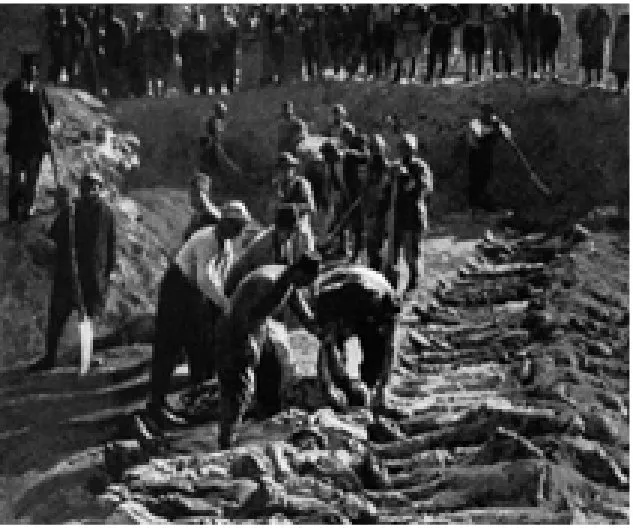
Intensified by Hamid’s legislation, the tension between Armenians and the Ottoman regime culminated in Abdul Hamid II’s employing violence to establish a Culture of Exterminability from 1894 to 1896. The unfair taxation and the religious discrimination both created societal tension leading up to 1894. In August 1894, the refusal of Armenian villagers in the vilayet of Sassoun to pay “double taxation” prompted Hamidiye Cavalry regiment leader Zeki Pasha to intervene, starting a massacre that killed 7,000 Armenians in just the month of August. Though Hamid signed to organize reforms in October of 1895, he continued massacres in at least 29 vilayets, including in large regions of Van, Erzurum, and Bitlis, from October to December. In just under three months, there were 200,000 deaths, which was 8% of the entire Armenian population and an average rate of 2000 deaths per day. In Aintab, Armenia on November 18th, 1895, a college eye-witness described “a great noise of shouting and firing of guns, telling us that the work of blood and plunder had begun here, also.” An image published in Harper’s Weekly in December of 1895 displaying the undignified and ghastly burial of tens and hundreds of Armenians lined up row after row encapsulates the dehumanization of the Armenian populace (see Image 1). Both the rate at which Armenians were killed in 1895 as well as the human accounts of the massacres served as indications of the even larger scale of genocide that was about to happen in 1915. Therefore, this final explosion of escalating legislative, religious, and economic tensions presented itself in violence orchestrated by Hamid in the Hamidian Massacres, directly intensifying the climate of Exterminability.
While the Ottoman Empire and Hamid’s acts of harm escalated, the CUP’s legislation and violence coexisted from 1909 to 1915, maintaining the Culture of Exterminability. In 1908, Abdul Hamid was deposed by the Young Turks, a movement that emphasized scientific advancement, state modernity, and elite rule. Then, in the next year, the Young Turks established conscription laws that allowed Armenians, who were previously banned from serving in the military, to serve. Although this legislation was a positive change for Armenians, it was a harm in disguise, causing the installation of 50,000 Armenian men to 100 labor battalions. From 1909 to 1915, these labor battalions worked and lived in atrocious conditions, which were deliberately designed so to the end of killing Armenian laborers; food supplies were scarce, there was no medical care, and many soldiers abused the conscripts. Soon, after the January 1915 defeat in the Battle of Sarikamis, the Minister of War and CUP leader Ismail Enver blamed the Armenians in these battalions as a major reason for their loss. A directive was published in the next month, turning battalion camps into concentration camps and ordering all Armenians to be killed. The inhumane treatment and order of murder of Armenians as a result of their joining the labor camps due to the conscription laws contributed to the culture of hostility, extreme maltreatment, and Exterminability. During this same time period of the CUP, there were also mass displays of violence. In 1909, the Adana Massacres broke out in Adana - organized by the CUP, it was largely due to the unstable political framework in the Ottoman Empire as the Young Turks Revolution occurred in July of 1908. In just more than one month, 4437 Armenian homes were burned, while 30,000 civilians, 2% of the entire Armenian population, were murdered. Rose Lambart, who was a Christian missionary in Hadjin, Adana, detailed in her eye-witness account that “space will not permit to write in detail of the many who were crucified, thrown into the river, killed with swords and axes, burned by the thousands.” She specifically noted the various types of torture and inhumane deaths committed against the Armenians and expressed deep sadness and anger for the tragedy. Hence, both the immense rate of death and first-person accounts point towards a culture of discrimination and Exterminability. The tensions of the current revolution as well as previous hostility had already intensified the massacres, thus causing the coexistence of acts of harm that were on different levels of hostility. Therefore, the conscription laws and the Adana Massacres by the CUP overlapped from 1909 to 1915; both legislation and violence were simultaneous in deepening the Culture of Exterminability.
Escalating from discriminatory legislation to violence, the Ottoman Empire led by Hamid fostered a Culture of Exterminability in Armenia, while the CUP continued to exacerbate this culture. Ultimately, Hage explicates the significance of this Culture of Exterminability. He explained that many would call him alarmist and refuse to accept the jarring idea of people preparing for other peoples’ extermination. Yet, observing and reckoning with the existence of this culture and its origins is integral to our understanding of history. Perhaps more importantly, tracking Exterminability is integral to making sure that the genocidal tragedies of history do not repeat themselves.
Figures
Citations
- Bliss, Edwin M. Turkey and the Armenian Atrocities. Keystone Pub., 1896. Digital file.
- Editors, White Ink. “He Organized His ‘Knights’ to Kill Innocent People: Abdul Hamid II.” White Ink. Accessed September 29, 2024. https://whiteink.info/he-organized-his-knights-to-kill-innocent-people-abdul-hamid-ii-started-the-armenian-massacres/?lang=en.
- Hage, Ghassan. “Arendt, Foucault and Cultures of Exterminability.” Hage Ba’a (blog), March 19, 2019. Accessed October 2, 2024. https://hageba2a.blogspot.com/2019/03/arendt-foucault-and-cultures-of.html.
- Harper’s Weekly. The Erzeroum Armenian victims of the massacres are buried in a mass grave in Erzeroum cemetery. Photograph. Accessed October 2, 2024. https://commons.wikimedia.org/wiki/File:Armenia22hamidian.jpg.
- Harvard Divinity School. “Young Turks, The.” https://rpl.hds.harvard.edu/faq/young-turks.
- Kévorkian, Raymond. “The Origins And Evolution of the Armenian Genocide.” AGBU Magazine, April 2015. Accessed October 2, 2024. https://agbu.org/remembering-past-redefining-future/origins-evolution-armenian-genocide.
- Lambert, Rose. Hadjin And The Armenian Massacres (1911). Fleming H. Revell company, 1911. Digital file.
- Martirosyan, Tigran. “Labour Battalions (Ottoman Empire/Middle East).” International Encyclopedia of the First World War. Last modified October 25, 2022. https://encyclopedia.1914-1918-online.net/article/labour-battalions-ottoman-empiremiddle-east/#easy-footnote-bottom-5-1088339.
- Matossian, Bedross Der. “From Bloodless Revolution to Bloody Counterrevolution: The Adana Massacres of 1909.” Faculty Publications, Department of History, Summer 2011, 152-73. Digital file.
- Movsesian, Mark. “Elusive Equality: The Armenian Genocide and the Failure of Ottoman Legal Reform.” St. John’s Law Scholarship Repository, 2010, 1-17. Digital file.
- Tashjian, Yeghia. “The Class Struggle in the Ottoman Empire and the Armenian Genocide.” The Armenian Weekly. Last modified April 21, 2021. Accessed October 2, 2024. https://armenianweekly.com/2021/04/21/the-class-struggle-in-the-ottoman-empire-and-the-armenian-genocide/.
- Yavuz, M. Hakan, and Peter Sluglett. War and Diplomacy : the Russo-Turkish War of 1877-1878 and the Treaty of Berlin. Salt Lake City, UT: University of Utah Press, 2011. Digital file.
